
Legends say there is a second type of rainbow, one less colorful, but vengeful. They say it is made of colors ranging from purple to orange to red, with grey and black as well. It is seen as an ill omen. In the ancient world, to see the Painbow was to see death. Very few who ever saw it got to tell the tale.
The Painbow is said to be an ancient being, older than humanity, older than the hills, vomited up from the primordial soup from which all live emerged. Usually evolution weeds out the week, the apex predators don’t survive a large scale environmental shift, the critters who found a specific niche find themselves having a hard time coping when snowball earth occurs.
Not the Painbow.
The ancient cultures of Ancient Mesopotamia spoke of the Painbow, both with fear and deference. They knew that to speak too loudly of the Painbow was to invoke it.
They knew it was often summoned by the gods as a means of cleaning up the battlefields of the lowly, ever-fighting humans. It was summoned whenever there was a mass death event. It is rumored it was what actually cleansed the earth after the great flood. The ancient scribes who transcribed Torah, left the Painbow out of the Dead Sea Scrolls for fear of summoning it. It is said that in the original text, Noah gazed upon the Painbow from the stern of the Ark, as the floated away, watching it devour the wicked humans who were killed by the flood. The gods brought the rains to wash the blood away, and the Painbow cleaned the meat.
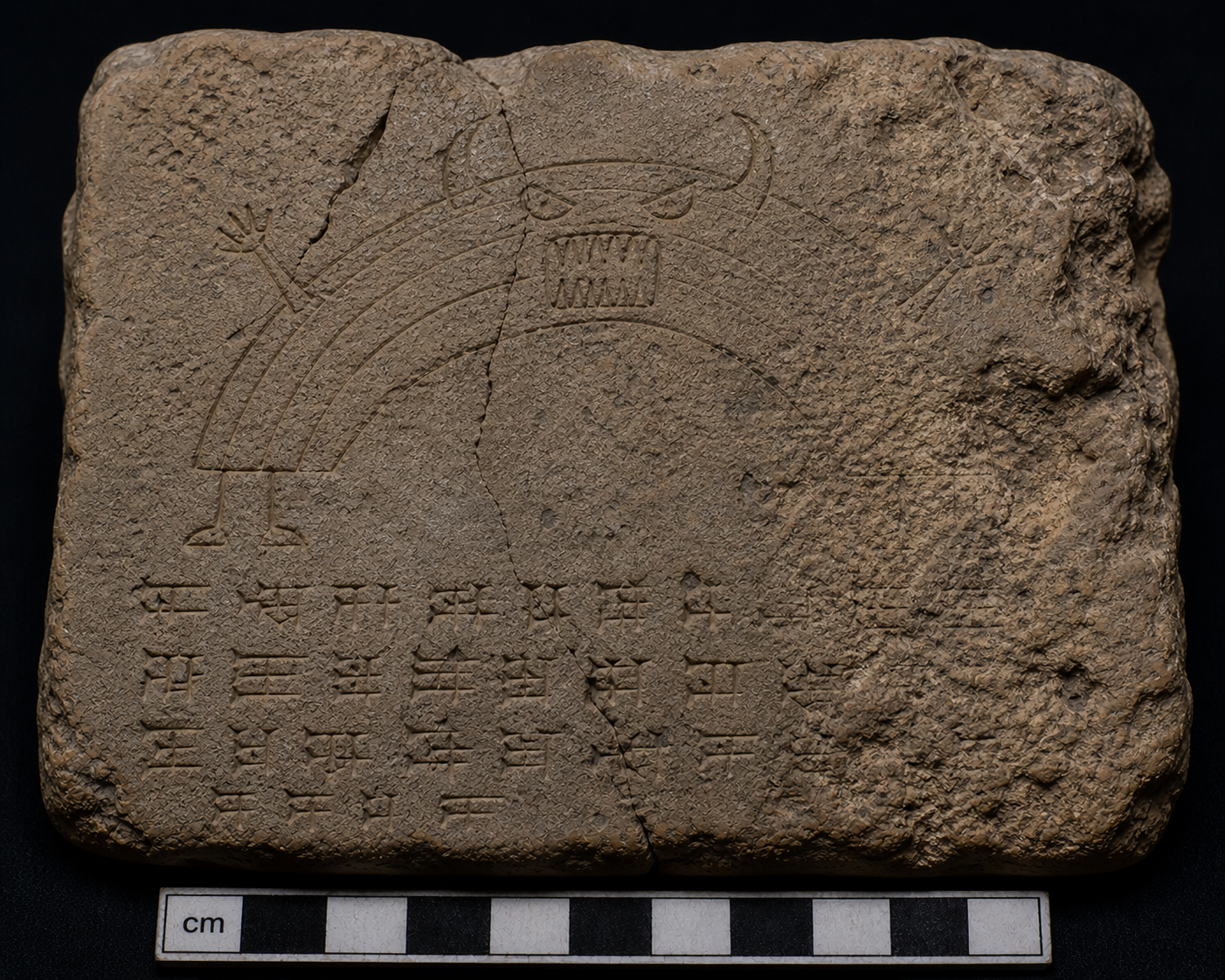
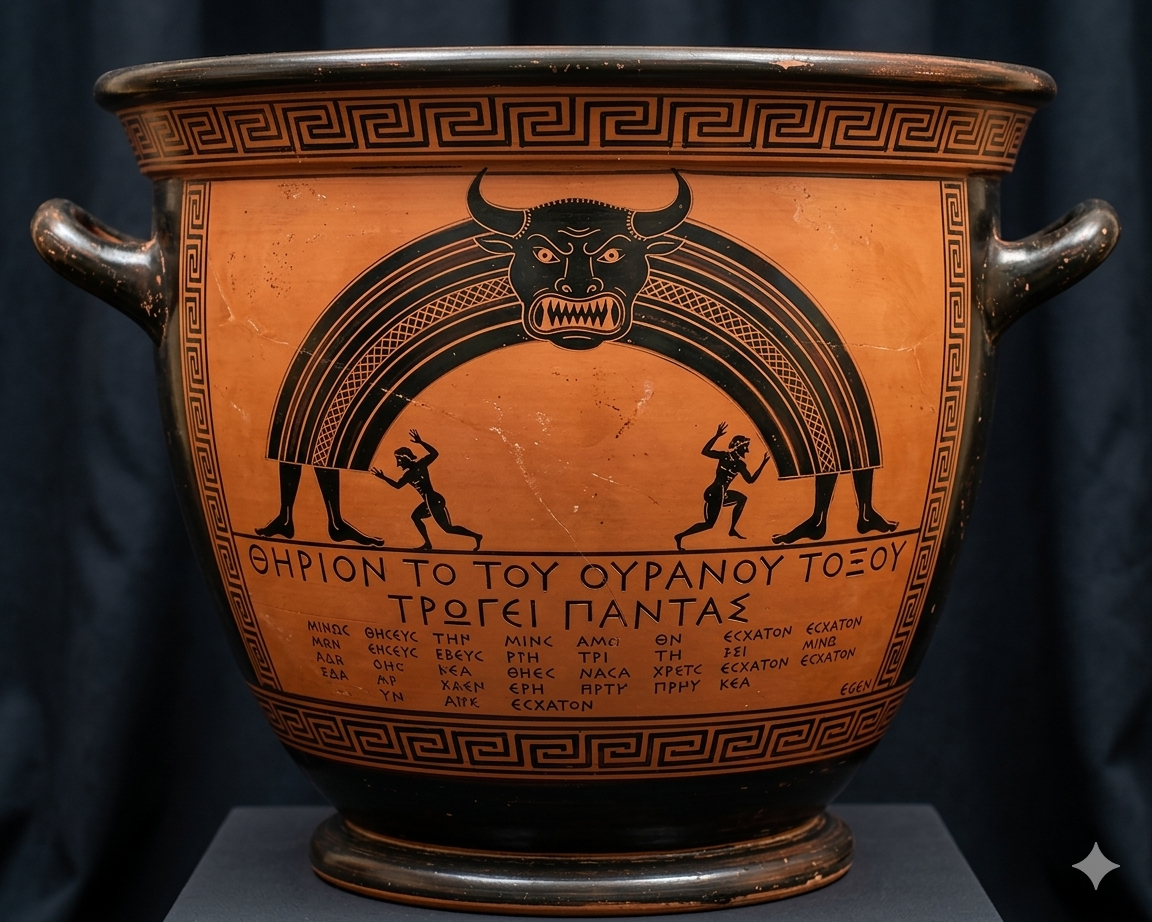
Many legends swirled in the ancient world about the Painbow and its origins. The Greeks had many ideas about the origins and nature of the Painbow.
Some thought it is a sky god, vengeful and spiteful, that it shoots lightning bolts from its eyes, spits hail from is mouth, that thunder is its foot stomps, floods from its vomit, causing mayhem and wreaking havoc, expressly for its own purposes.
Some say it was a sky god, shunned and ridicules by the others and it exacts it’s revenge through storm destruction. That it is the sad son of the real storm god, and it is nothing but a petulant child sky god.
Others still, say it has befallen many armies that have turned against their gods, it feasting on their corpses while the rain washes the blood from the battlefield, it cleans the meat and the gore and offal from the battlefield. That the vultures, ravens, coyotes, and other scavengers do its bidding and wait their turn until it has had its fill.
Hyphonos coined the term Painbow, a demon of vengeance. It was summoned against one’s enemies, but the cost of summoning it is great. Not only does it inflict pain on thine enemies, it inflicts a pain on the summoner and people who invoke it’s presence. It’s price is extremely high.
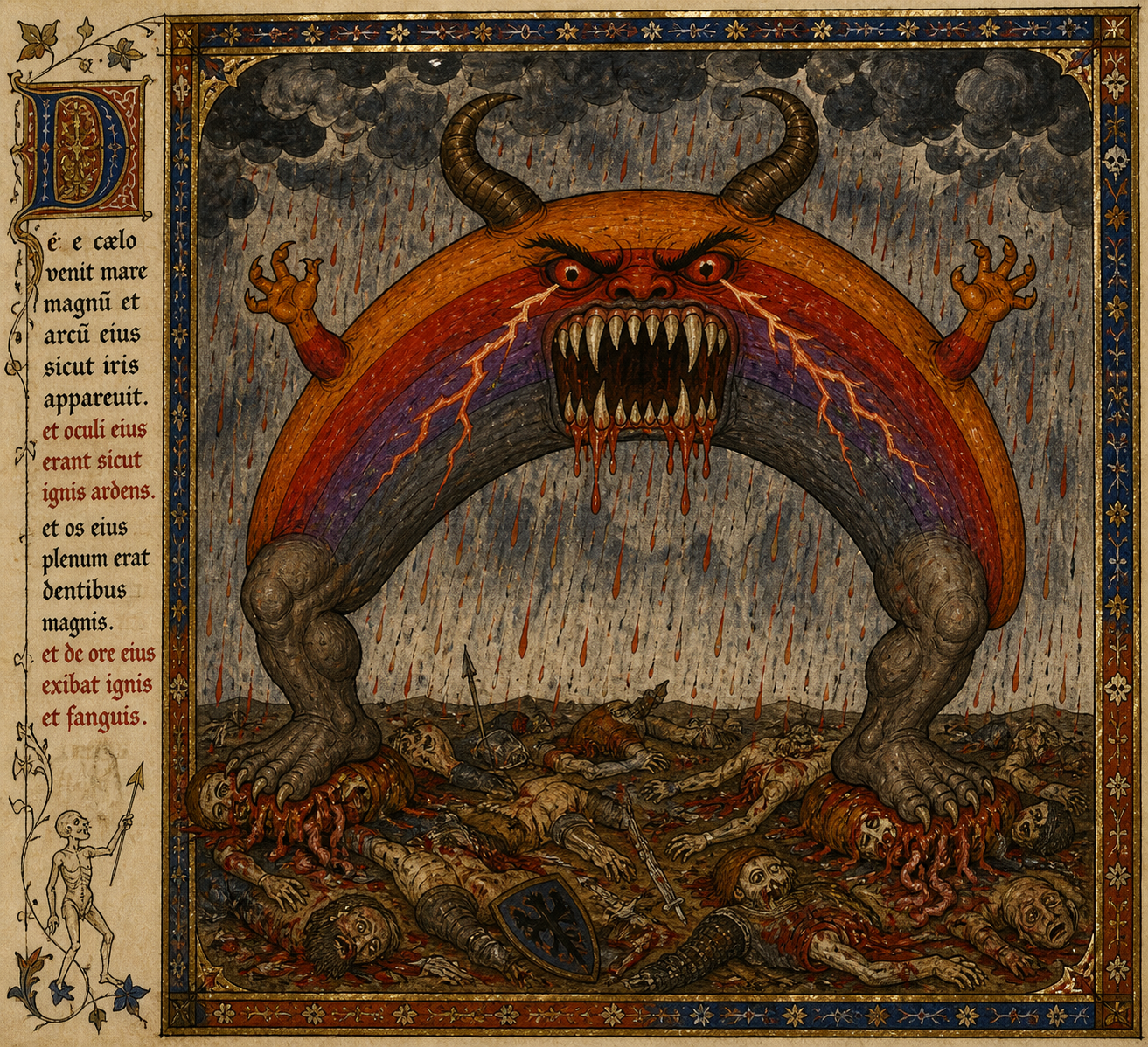
The Ottoman’s during a campaign in what is today Czechia, when Suleiman the Magnificent tried to take Praha. The people of the city, against the teachings of the Church, called up on the Painbow to take vengeance on the Ottoman Turks who were invading. It did, and it was recorded in a manuscript show below. The Vyskocil Manuscript was found in a small book shop in Praha in 1846. Little is known of it except for the curious rendering of what is referred to as the “Sky Disease”.
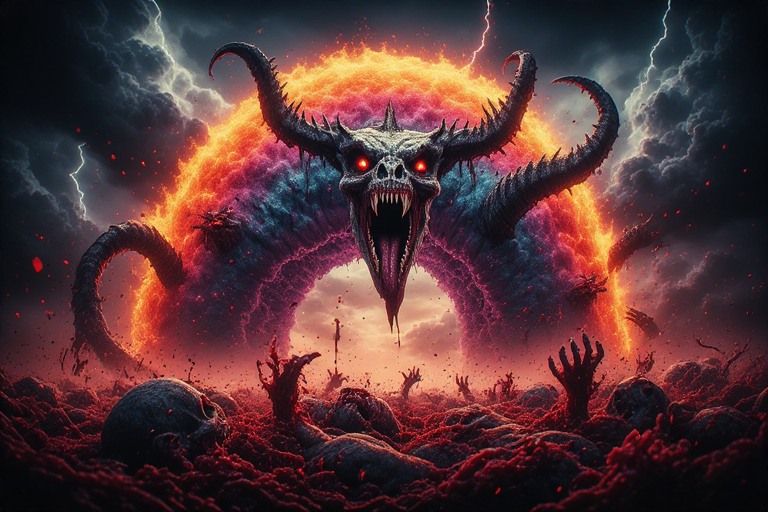
The Painbow has been used in Science Fiction Horror about a planetary sized demon who visits other planets to wreak havoc and harvest the life on the planet for it’s own sustenance.
It is unclear and unknown if the Painbow is real or not.